
Irrigation Controller & Timer Repair in Methuen, MA
Diagnosing the Brain of Your Sprinkler System. When an irrigation controller fails, it produces symptoms that look exactly like valve failures, wiring faults, and zone problems — making it one of the most misdiagnosed components in a residential sprinkler system. Trinity Landscaping has been diagnosing and repairing irrigation controllers and timers for residential and commercial properties throughout the Merrimack Valley for over 21 years.
What Is Irrigation Controller & Timer Repair?
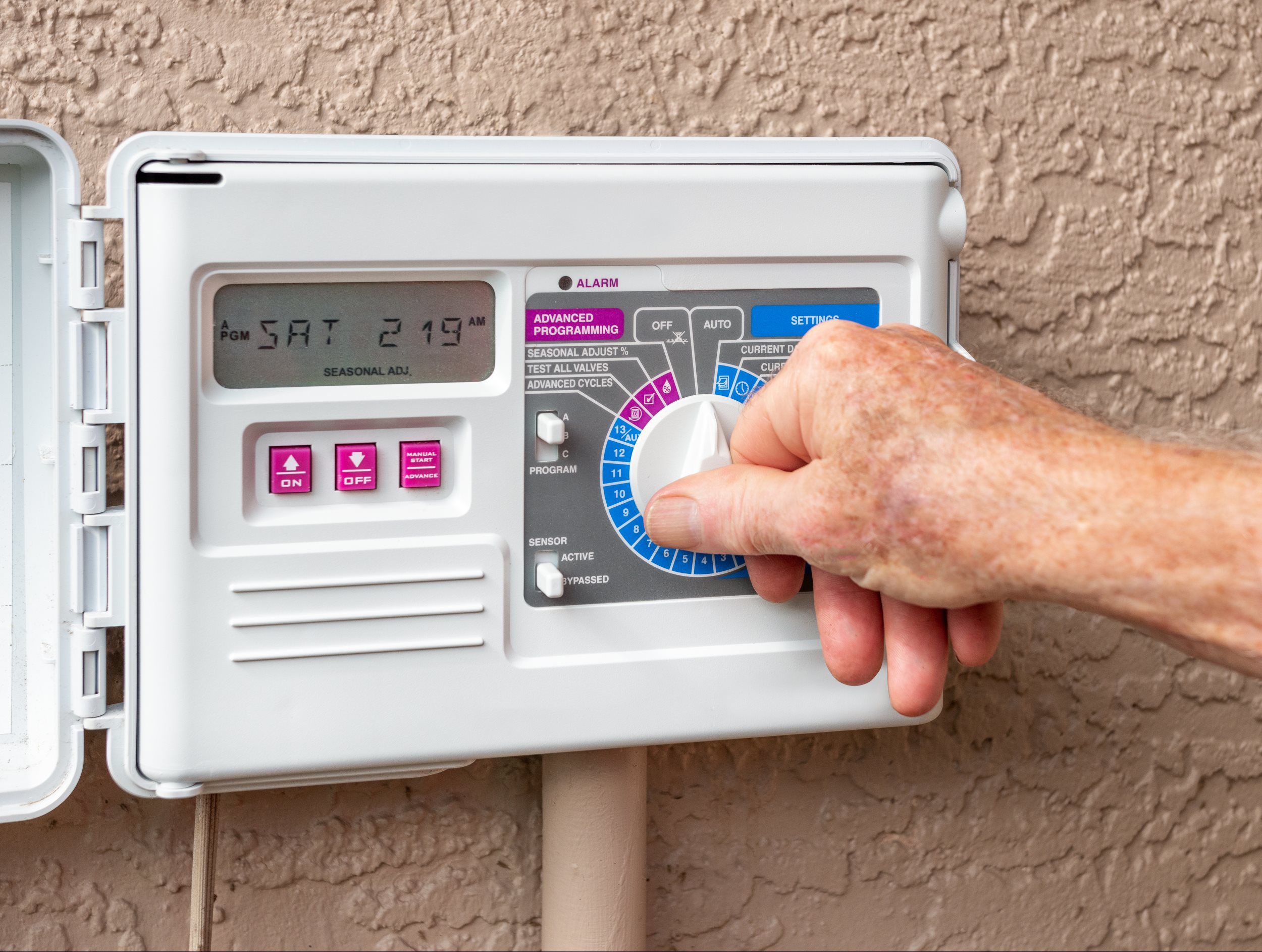
Irrigation controller repair covers the diagnosis and correction of malfunctioning irrigation timers and controllers — the electronic devices that signal each zone valve to open and close on a programmed schedule. The controller is the command center of the irrigation system. Every zone activation, every cycle duration, every seasonal schedule adjustment flows through the controller. When it fails — or when it appears to fail — the entire system stops responding correctly, zones run at the wrong times or not at all, and the homeowner is left with a system that's either not watering or watering uncontrollably with no obvious explanation.
The diagnostic challenge with controller problems is that controller failures produce symptoms that are identical to other irrigation failures. A zone that won't activate could be a burned-out valve solenoid, a wiring fault between the controller and the valve, or a failed zone output terminal on the controller board. A system that runs continuously could be a stuck valve, a shorted zone wire, or a controller output that's failed in the energized position. Determining which component is actually responsible — controller, wiring, or valve ...More
Signs Your Irrigation Controller or Timer Needs Repair
Zones that won't activate on schedule despite correct programming
If one or more zones aren't running on their programmed schedule, the fault is somewhere in the chain from controller output to valve solenoid. Systematic diagnosis starting at the controller terminal determines whether the output voltage is present at the zone terminal — if it is, the controller is functioning and the fault is downstream in the wiring or solenoid. If it isn't, the controller zone output has failed. This distinction matters because the repair for a failed controller output is different from the repair for a failed solenoid, and treating one as the other wastes time and money.
All zones failing simultaneously
When every zone in the system stops working at the same time, the fault is upstream of the individual zone outputs — either the controller's power supply, the master valve output, the common wire, or the controller's internal processor. Individual zone output failures are statistically independent and don't typically occur simultaneously. A complete system failure that happens overnight or after a power event almost always points to the controller, the power supply, or the common wire rather than to coincident individual valve failures.
Zones running at the wrong times or outside their programmed schedule
A controller that runs zones outside their programmed schedule — activating at 2:00 PM when programmed for 5:00 AM, running zones twice, or activating zones that have been turned off — has either experienced a program corruption event, a power surge that reset the internal clock, or an internal processor fault. In some cases, this symptom is caused by a dead backup battery rather than a controller board failure — the clock loses its programming when the main power is interrupted without a functioning backup. This is one of the simpler controller problems and one that's easy to overlook.
The controller display is blank, frozen, or showing error codes
A blank display on a controller that's receiving power indicates an internal board failure, a blown fuse in the power supply, or a display component fault. A frozen display — one that shows the correct time and program but doesn't respond to button inputs — indicates a processor lockup that may resolve with a power cycle or may indicate a board failure requiring replacement. Error codes on controllers that display them should be cross-referenced with the manufacturer's diagnostic guide before any component is replaced — many error codes indicate field wiring problems rather than controller faults.
A controller that's more than 15 years old and showing any instability
Irrigation controllers have a practical service life of 10 to 15 years under normal operating conditions. Controllers beyond that age showing intermittent behavior — zones activating inconsistently, programs resetting without explanation, display behavior that varies day to day — are approaching end-of-life failure rather than experiencing a repairable fault. At this stage, replacement with a current-generation controller — particularly a smart, weather-based model — is more cost-effective than repair and delivers meaningfully better performance than the aging unit it replaces.
Irrigation Controller & Timer Services at Trinity Landscaping
Every controller diagnosis starts with a full system run-through before any testing begins. We activate each zone from the controller manually and observe which zones respond correctly, which fail to activate, and which behave erratically. We note the controller model, age, and display behavior, check whether the programmed schedule is intact, and verify that the power supply is delivering the correct voltage to the controller.
Irrigation Controller & Timer Repair FAQs
How much does irrigation controller repair or replacement cost in Methuen, MA?
Controller repair costs depend on whether the fault is in the controller output, the power supply, or the field wiring — and whether repair or replacement is the correct path. Wiring repairs and power supply module replacements are on the lower end of the cost range. Controller board replacement or full controller replacement involves the cost of the replacement unit plus installation and programming. Smart controller upgrades from mechanical or basic electronic timers involve the controller unit cost plus configuration time.
What is the difference between an irrigation controller and an irrigation timer?
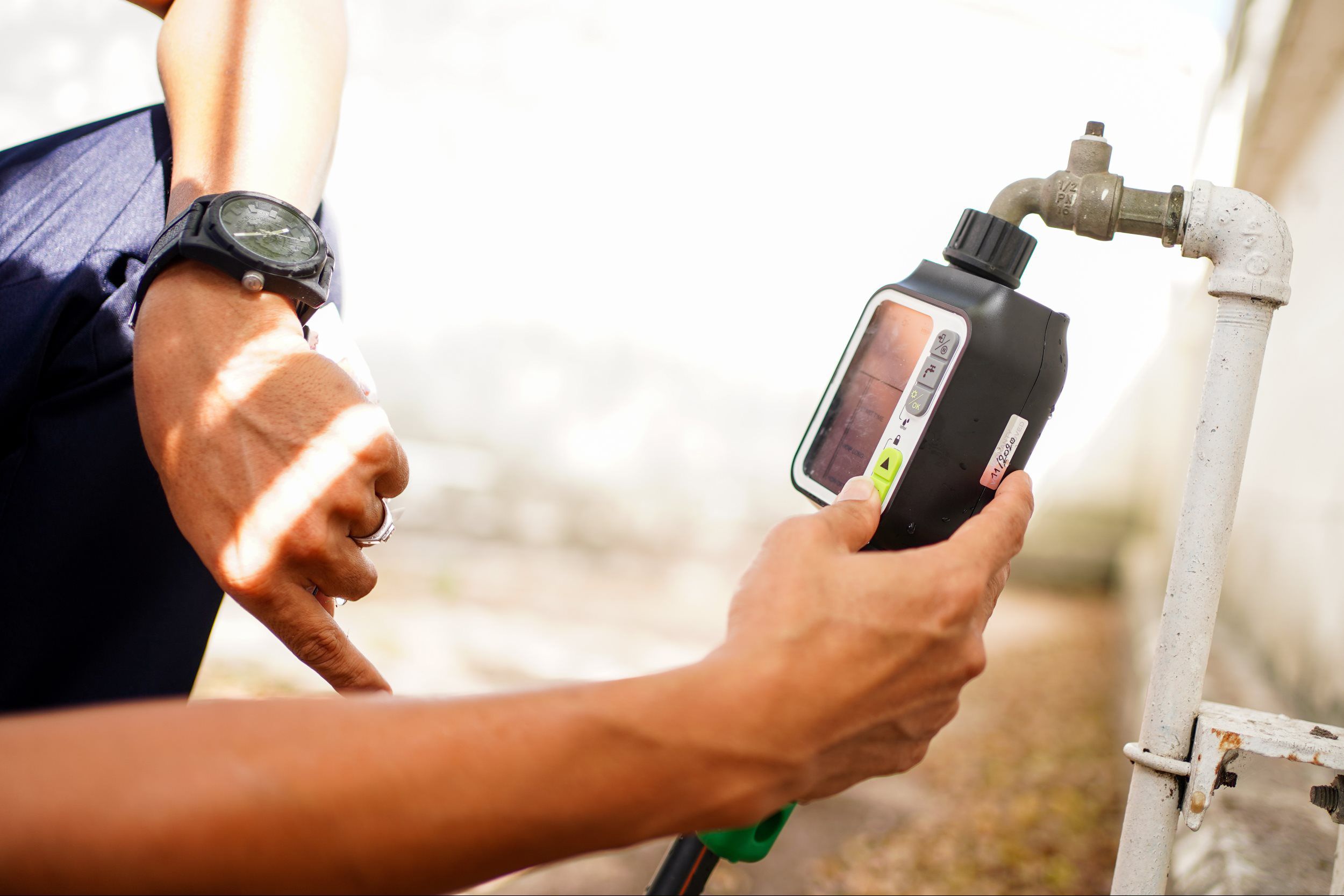
The terms are often used interchangeably, but they describe different levels of technology. A timer is a simpler device — mechanical or basic electronic — that activates zones on a fixed schedule without any environmental awareness. It runs the same program regardless of whether it rained yesterday or whether a drought period has increased plant water demand. A controller — particularly a smart or weather-based controller — receives external data inputs (weather station data, evapotranspiration calculations, soil moisture readings) and adjusts the irrigation schedule dynamically based on actual plant water demand. For Merrimack Valley properties with variable precipitation, the practical difference between a timer running a fixed schedule and a smart controller adjusting to actual conditions is measurable in both lawn health outcomes and water use.
My zone won't run — how do I know if it's the controller or the valve?
The fastest way to distinguish a controller fault from a valve fault without test equipment is to manually activate the valve at the solenoid — bypassing the controller entirely. If the zone runs when the solenoid is manually activated but won't run from the controller, the fault is in the controller output or the wiring between the controller and the valve. If the zone won't run even with manual solenoid activation, the fault is in the valve itself. With a multimeter, the distinction is cleaner — testing output voltage at the controller terminal and solenoid resistance through the field wiring isolates the fault to the correct component in 20 minutes. This is the diagnostic sequence we follow on every zone failure call before any component is replaced.
How long does controller repair or replacement take?
A controller diagnosis — testing output terminals, field wiring resistance, and common wire continuity — typically takes 30 to 60 minutes. Controller replacement including removal of the old unit, installation and wiring of the replacement, and full zone programming takes one to two hours depending on zone count and controller complexity. Smart controller installation and configuration — including WiFi setup, zone parameter entry, and schedule programming — takes two to three hours for a typical residential system. We give you a realistic time estimate after the initial assessment.