Drip System Repair in Methuen, Massachusetts
Trinity Landscaping repairs residential and commercial drip irrigation systems throughout Massachusetts and Southern New Hampshire. We work exclusively on irrigation systems — drip repair, emitter replacement, pressure regulator service, and distribution line repair are services we perform every season across the full Merrimack Valley bi-state region. If your drip system isn't delivering water correctly, call us and we'll find out exactly why.
What Is Drip System Repair?
Drip irrigation repair covers any diagnosis and correction of a malfunctioning drip system — from a single clogged emitter to a failed pressure regulator to a cracked distribution line that's been slowly losing water underground for an entire season. Unlike traditional sprinkler systems, drip irrigation delivers water at low pressure and low volume directly to root zones, which makes it highly efficient when it's working correctly and silently damaging when it isn't. A drip system failure rarely announces itself the way a broken sprinkler head does — the signs are quieter, slower, and easier to miss until significant plant loss or water waste has already occurred.
Drip systems fail in ways that are distinct from conventional sprinkler failures. The most common failure points are emitter clogs — mineral deposits and biological buildup that restrict or completely block water delivery to individual plants — followed by distribution tubing cracks and punctures, pressure regulato...More
Signs Your Drip Irrigation System Needs Repair
Wilting or underperforming plants in specific zones despite regular irrigation cycles
This is the most common sign of a drip system problem and the one most homeowners attribute to the wrong cause. If plants in one section of a bed are consistently stressed while surrounding plants are healthy, the drip emitters serving that section are likely clogged, disconnected, or delivering the wrong flow rate. The longer this goes unaddressed, the more established the plant stress becomes — and in some cases, permanent root damage occurs before the irrigation problem is identified.
Wet spots or pooling water in areas that shouldn't be saturated
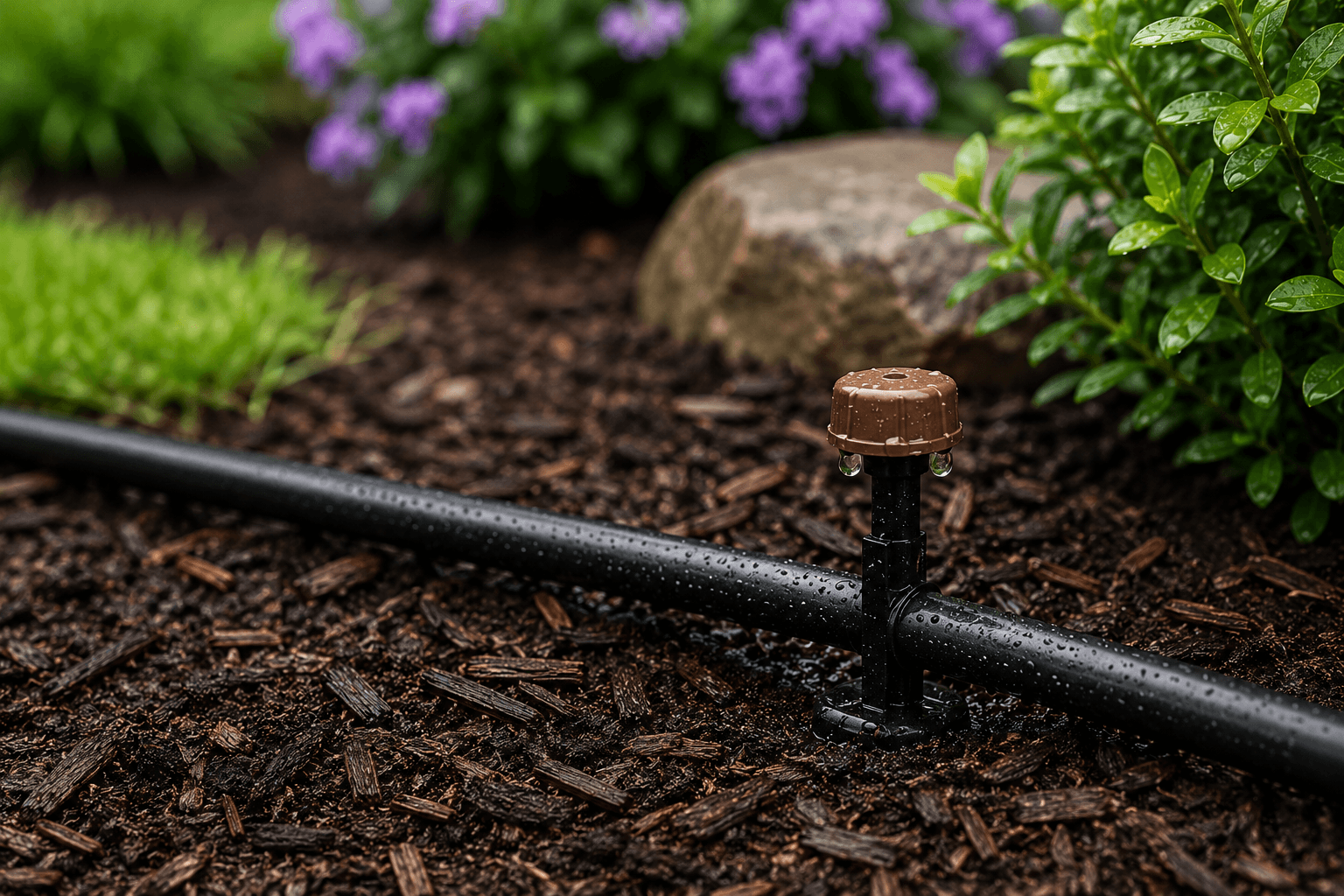
If you're finding consistently wet areas near drip lines that don't correspond to scheduled irrigation, a distribution line has likely cracked or a barbed emitter fitting has pulled free from the tubing. Drip systems operate at low pressure, so a line break doesn't produce the obvious spray of a sprinkler failure — it seeps slowly and saturates the surrounding soil. On Merrimack Valley properties where spring ground movement from freeze-thaw cycling stresses buried tubing, line separations at barbed fittings are particularly common at the start of the season.
Dramatically increased water bills without any change in irrigation schedule
system running a hidden leak — a cracked line, a pulled fitting, a failed emitter body — can waste thousands of gallons per season without producing any visible surface sign. If your water usage has increased without explanation during irrigation season, a drip system pressure test is the fastest way to identify whether the system is the source.
Pressure problems — either chronically weak flow or emitters that keep popping off the line
Both conditions point to a pressure regulator issue. A regulator that has drifted below its rated output pressure causes weak flow across the entire zone. A regulator that has failed open allows line pressure to exceed the rated operating range of the emitters, which causes them to physically eject from the distribution tubing. Either condition affects every emitter in the zone simultaneously — if all emitters in a zone are performing poorly, the problem is upstream of the emitters themselves.
The system hasn't been flushed or inspected since installation
Drip systems require periodic flushing to clear mineral and biological buildup from distribution lines and emitters. A system that has never been flushed will develop progressive clogging across the zone — usually starting with the emitters furthest from the supply point, which receive the most accumulated debris. If your drip system has been running for two or more seasons without a maintenance check, a full inspection is warranted regardless of whether visible symptoms have appeared. If you're seeing any of these signs, the right move is a system diagnosis before the growing season gets underway. A drip failure caught early costs a fraction of what it costs after a summer of inadequate irrigation and plant replacement. Call (617) 930-0270 to schedule an inspection.
Drip Irrigation Repair Services at Trinity Landscaping
Trinity Landscaping diagnoses and repairs drip irrigation systems for residential and commercial properties throughout the Merrimack Valley — fixing clogged emitters, cracked distribution lines, failed pressure regulators, and blocked filter screens that cause drip systems to silently underwater plants for an entire season without a single visible warning sign.
Sprinkler System FAQ
How much does drip system repair cost in Methuen, MA?
Drip repair costs vary based on what's failing and how many components need attention. Emitter replacements and filter screen service are on the lower end of the cost range. Pressure regulator replacement, distribution line splicing, and multi-zone inspections with several component repairs involve more time and materials and cost accordingly. We give you a clear price after the inspection and before any work begins — not after the job is done.
What is the difference between drip irrigation repair and sprinkler system repair?
Drip irrigation and conventional sprinkler systems fail in completely different ways and require different diagnostic approaches. Sprinkler failures are usually visible — a broken head, a zone that won't run, a valve that's stuck open. Drip failures are typically silent — a clogged emitter delivers no visible symptom other than a stressed plant, and a line break seeps slowly rather than spraying obviously. Drip systems also operate at much lower pressure than sprinklers, which means the diagnostic tools and pressure specifications used for sprinkler repair don't apply directly to drip system work. The two systems share a controller and a water supply but are otherwise separate in how they're diagnosed and repaired.
Can drip system problems damage my plants permanently?
Yes — and this is what makes drip failures worth addressing quickly. A clogged emitter delivers zero water to the plant it serves. Unlike a sprinkler head that waters an area even at reduced efficiency, a failed drip emitter is a complete delivery failure for that specific plant. During a Merrimack Valley summer drought period, a week or two of no water from a failed emitter can cause irreversible root damage to established perennials, shrubs, or foundation plantings. The irrigation repair cost is almost always less than the plant replacement cost.
How long does drip system repair take?
A single-zone inspection with emitter replacement or line splicing typically takes one to two hours. Multi-zone inspections with pressure testing and several repairs across different zones take two to four hours. If the system requires pressure regulator replacement, filter screen service, and emitter work across multiple zones, allow a half-day visit. We give you a realistic time estimate after the initial inspection.