
Irrigation Valve & Manifold Repair in Methuen, Massachusetts
When an irrigation zone won't run or won't shut off, the cause is almost always inside the valve — a burned-out solenoid, a torn diaphragm, debris lodged against the valve seat, or a cracked casing from last winter's freeze. Trinity Landscaping has been diagnosing and repairing irrigation valves and manifolds in Methuen and across the Merrimack Valley for over 21 years.
What Is Irrigation Valve & Manifold Repair?
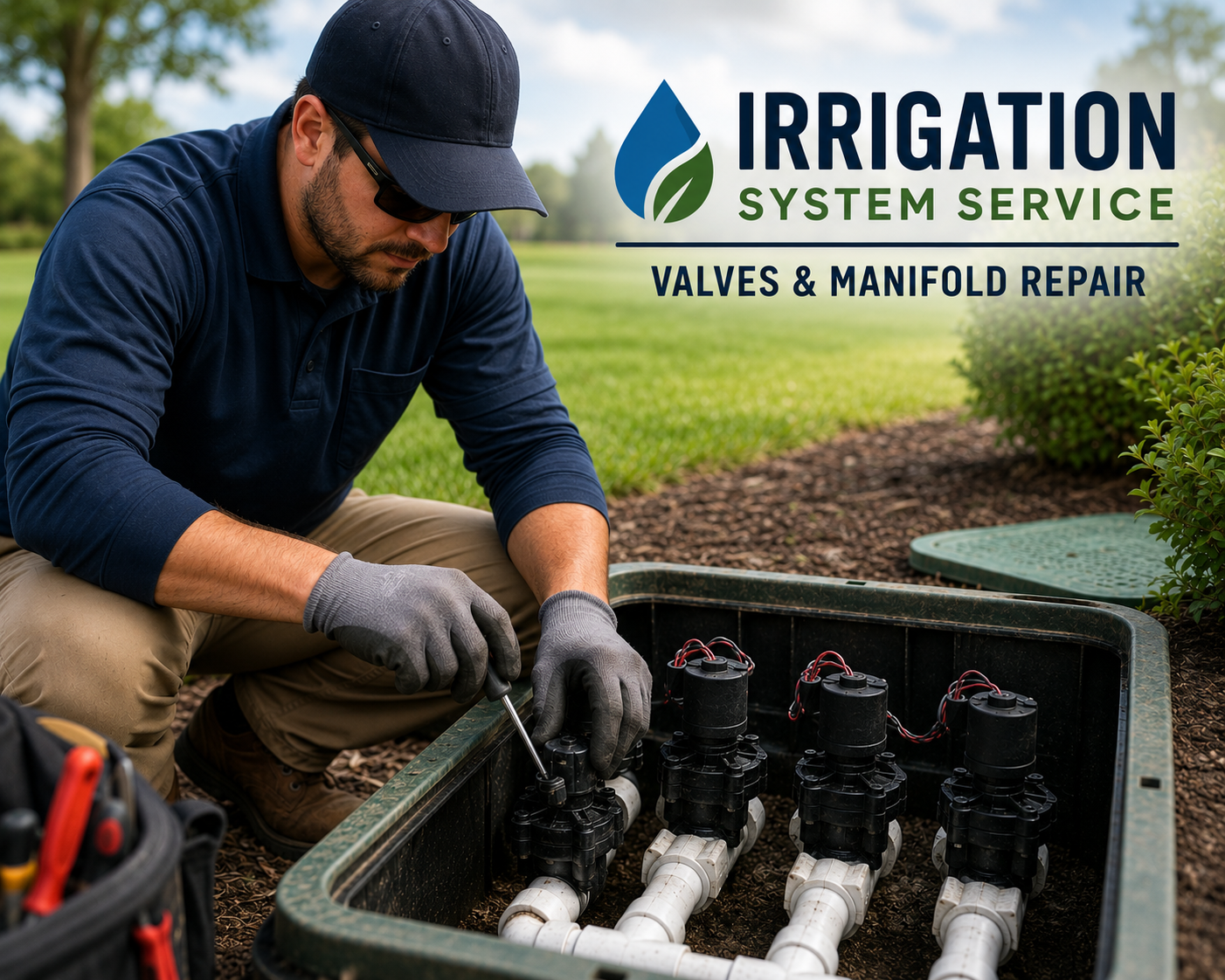
Irrigation valve and manifold repair covers the diagnosis and correction of failed or malfunctioning components that control water flow to individual zones in a sprinkler or irrigation system. Every zone in a residential or commercial irrigation system is controlled by a dedicated valve — an electromechanical device that opens when it receives a signal from the controller and closes when the cycle ends. When a valve fails, the zone it controls either stops working entirely or stops shutting off — two failure modes with very different consequences but the same underlying cause: a component inside the valve has worn out, been damaged, or lost its electrical connection to the controller.
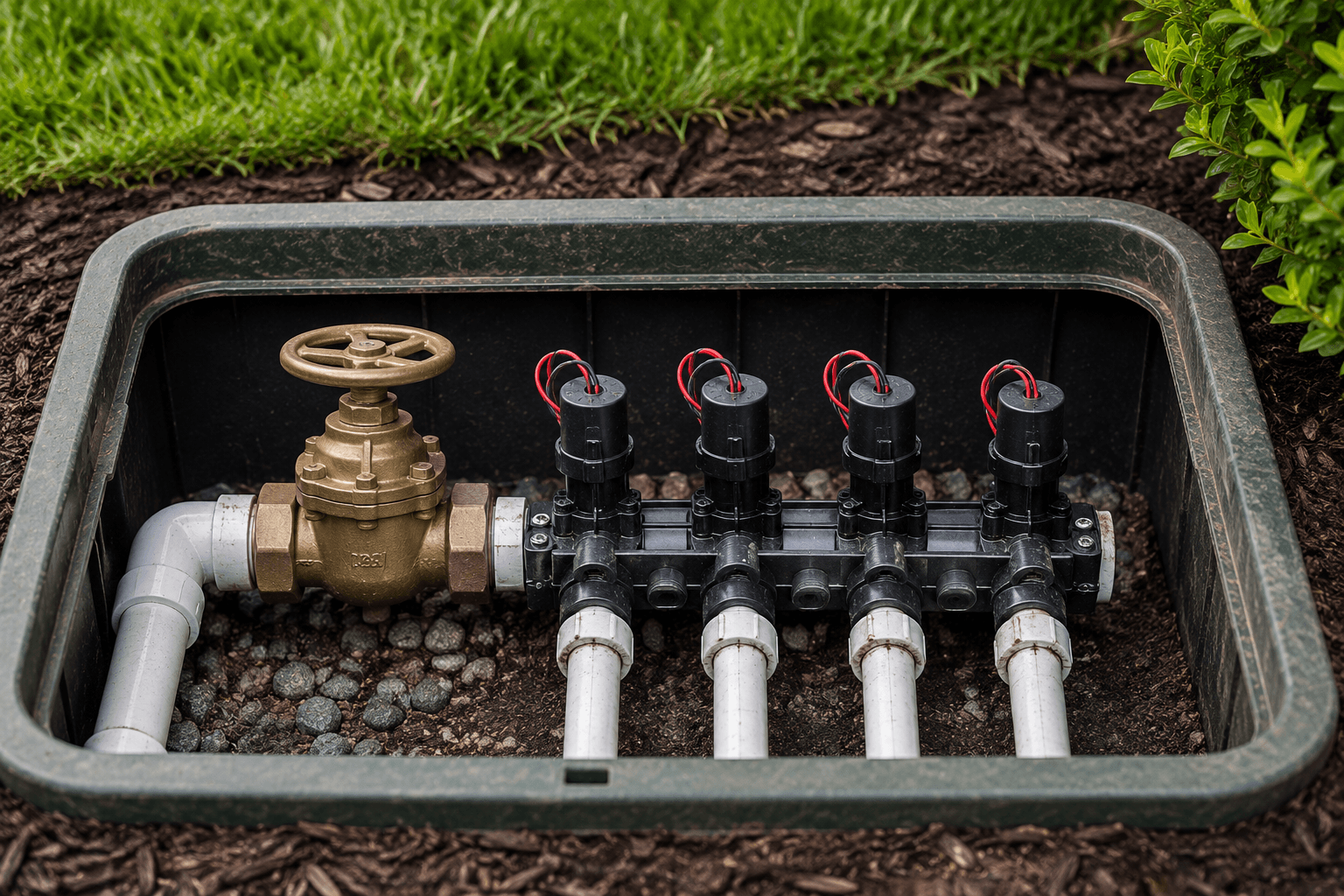
The manifold is the assembly where multiple irrigation valves are grouped together on a common supply line — typically housed in a valve box buried near the irrigation system's point of connection to the water supply. A properly functioning manifold delivers water under consistent pressure to every valve in the assembly and provides a central access point for diagnosis and service. Manifold failures are less common than individual valve failures but more significant in impact — a cracked ma...More
Signs Your Irrigation Valve or Manifold Needs Repair
A zone that won't run when the controller triggers it
This is the most common valve failure call we receive. When a zone fails to activate, the cause is almost always one of three things: a burned-out solenoid that can no longer receive the electrical signal from the controller, a diaphragm that has hardened or torn and won't lift off the valve seat, or a wiring fault between the controller and the valve. Each of these requires a different fix — which is why diagnosis before parts replacement matters. Replacing the solenoid on a stuck diaphragm produces no improvement and delays the actual repair.
A zone that won't shut off after the controller cycle ends
A zone that continues running after its scheduled cycle is a valve stuck in the open position — either a diaphragm that won't seat correctly due to debris or deterioration, or a solenoid that has failed in the energized position. This is the more urgent of the two common valve failure modes because a zone running continuously can flood lawn sections, saturate foundation areas, and run up water bills significantly before the homeowner notices. On Merrimack Valley properties where irrigation systems run early morning cycles, a stuck zone can run for hours before anyone is awake to catch it.
Water seeping from the valve box when no zones are scheduled
Seepage from a valve box during off-cycle periods indicates a valve that isn't fully closing — typically a diaphragm with a small tear or debris lodged against the valve seat that prevents a complete seal. The seepage is often slow enough that it doesn't produce obvious surface flooding, but it represents continuous water loss and progressive diaphragm deterioration. Left unaddressed, a seeping valve almost always progresses to a fully stuck-open failure within one to two seasons.
Multiple zones failing simultaneously
When two or more zones stop working at the same time, the problem is upstream of the individual valves — either a manifold supply issue, a main valve failure, a backflow preventer problem, or a master valve fault. Individual valve failures are statistically independent — the simultaneous failure of multiple zones almost never traces back to coincident individual valve failures. If two or more zones stop working on the same day, start the diagnosis at the manifold and work upstream before touching individual valves.
Zones running in the wrong sequence or overlapping
If zones are activating out of their programmed sequence, running simultaneously, or activating when they shouldn't, the issue is typically a wiring fault — crossed zone wires, a shorted common wire, or a controller output that's leaking voltage to an adjacent zone terminal. This produces confusing symptoms because the controller appears to be functioning correctly while the field behavior doesn't match the program. Systematic wiring continuity testing from the controller to each valve solenoid is the correct diagnostic approach.
Valve & Manifold Repair Services
We inspect the full manifold assembly — supply pressure, fitting integrity, valve connections, and freeze damage points — before any component is replaced. We serve residential and commercial properties throughout Massachusetts and Southern New Hampshire, exclusively focused on irrigation.
Irrigation Valve & Manifold Repair FAQs — Merrimack Valley
What is the difference between a solenoid failure and a diaphragm failure?
A solenoid failure means the valve can't receive the electrical signal from the controller — the zone won't activate at all, and the solenoid will show abnormal resistance when tested with a multimeter. A diaphragm failure means the mechanical component inside the valve body that controls water flow has torn, hardened, or has debris preventing it from seating correctly — the zone either won't shut off, seeps continuously, or runs at reduced pressure. Both produce zone failures, but the repair is completely different. Replacing a solenoid on a failed diaphragm produces no improvement; accurate component diagnosis before parts replacement is the only approach that resolves the problem correctly the first time.
Is a zone that won't shut off an emergency?
Yes — a zone stuck in the open position should be treated as an urgent repair. A continuously running zone can flood lawn sections, saturate foundation areas, and run up a water bill significantly in a short period. If you discover a zone that won't shut off and can't reach us immediately, shut off the irrigation system's main water supply valve at the backflow preventer or at the point of connection to the house supply. This stops the flow without damaging the system while you wait for a service appointment. Then call (617) 930-0270 to schedule a same-day or next-day visit.
Can I replace an irrigation valve solenoid myself?
Solenoid replacement is one of the more accessible DIY irrigation repairs — the solenoid typically threads onto the top of the valve body, the wiring connection is straightforward, and replacement solenoids for common valve brands are available at irrigation supply houses and some home improvement stores. The risk in DIY solenoid replacement is misdiagnosing the failure — if the zone still doesn't run after solenoid replacement, the problem is the diaphragm, the wiring, or the controller output, and the solenoid replacement accomplished nothing. If you've already replaced the solenoid and the zone still isn't working correctly, the next step is professional component-level diagnosis rather than another parts replacement attempt.
How long does valve and manifold repair take?
A single solenoid replacement or diaphragm rebuild typically takes one to two hours including diagnosis. Multi-valve failures with component-level testing across several valve boxes take two to four hours. Full valve body replacement or manifold repair requiring supply shutoff and pipe work may take a half day depending on system complexity and access. We give you a realistic time estimate after the initial diagnosis so you know what to expect before we begin.