
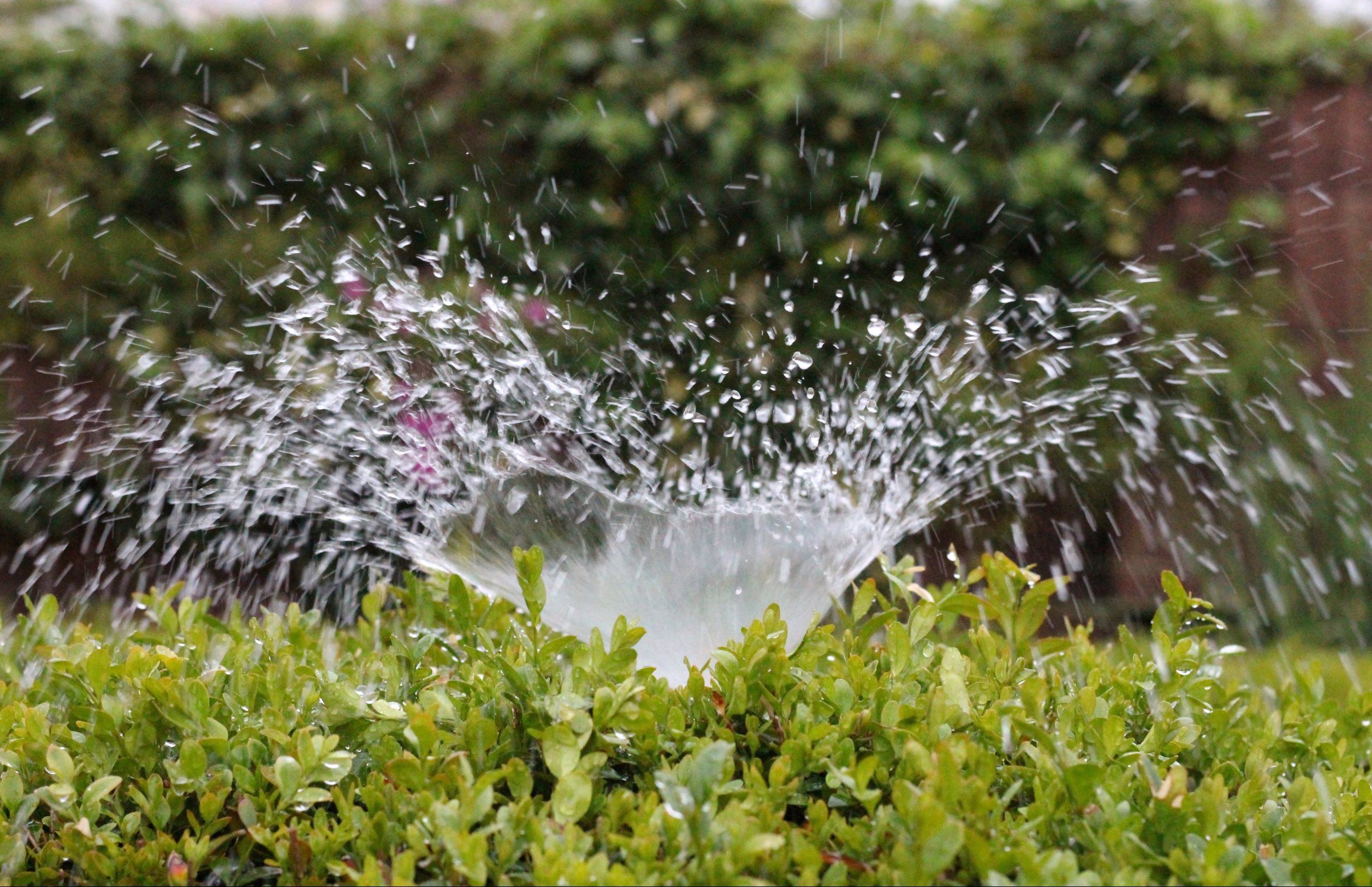
French Drain & Yard Drainage Installation in Methuen, MA
Standing water that won't clear after a rainstorm, saturated lawn sections that stay wet for days, pooling near your foundation after snowmelt — these aren't cosmetic problems. They're drainage failures that get more expensive the longer they go unaddressed. Trinity Landscaping designs and installs French drains, catch basins, channel drains, and yard drainage systems for residential and commercial properties throughout Massachusetts and Southern New Hampshire.— Solving Merrimack Valley Water Problems Since 2002
What Is Landscape Drain Installation?
Landscape drain installation is the design and placement of underground or surface drainage components that redirect excess water away from lawn areas, structures, and hardscapes before it causes damage. The goal is to control where water goes when it can't go down — moving it away from foundations, out of saturated lawn sections, and off the property through a defined drainage path rather than letting it find its own route across the yard, into the basement, or onto neighboring property.
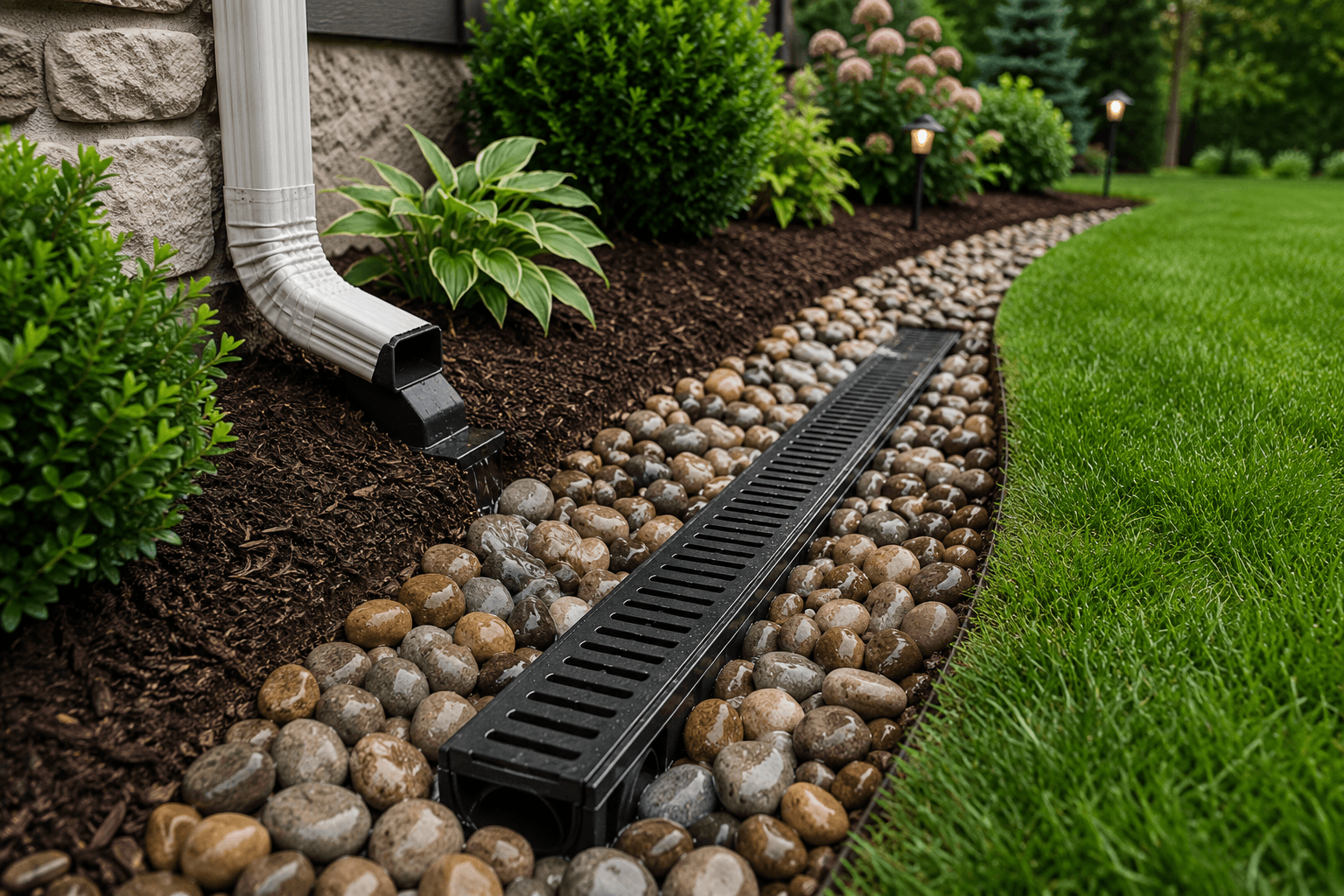
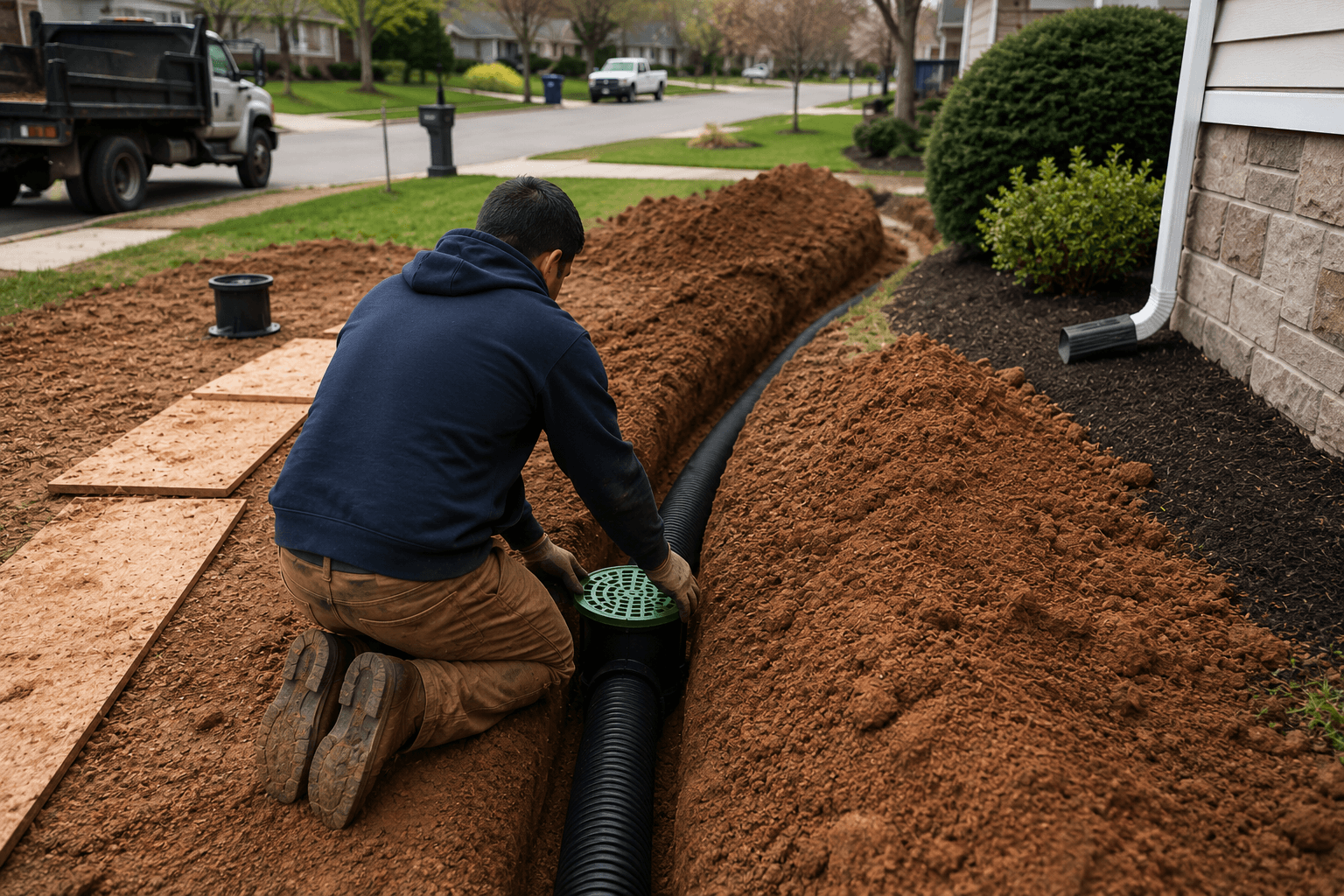
Drainage systems come in several configurations depending on where the water is coming from and where it needs to go. French drains — perforated pipe wrapped in filter fabric and surrounded by aggregate — are installed below grade to intercept water moving laterally through the soil and redirect it to a discharge point. Channel drains and catch basins capture surface water at low points and route it underground to a safe outlet. Downspout extensions and pop-up emitters redirect roof water away from the foundation before it saturates the soil immediately adjacent to the structure. The correct solution for a specific property depends on the drainage failure type, the soil composition, the...More
Signs Your Property Needs a Drainage System
Standing water that takes more than 48 hours to drain after a rain event
Soil that holds surface water for two or more days after a storm is either clay-heavy, compacted, or receiving more water than it can absorb from an upslope source. In the Merrimack Valley, where spring rain events frequently arrive on already-saturated ground from snowmelt, standing water that takes days to clear is a reliable indicator that the natural drainage capacity of the soil is insufficient for the volume of water the property receives. A French drain or catch basin installation intercepts that water before it pools.
Pooling water within six feet of your foundation
Water that consistently pools near the foundation is the most urgent drainage problem a homeowner can have. Foundation soils that are repeatedly saturated and dried undergo expansion and contraction cycles that stress foundation walls, accelerate basement moisture intrusion, and in severe cases contribute to foundation settlement. Every rain event that leaves water pooling against the foundation is a moisture exposure event for the structure. A drainage solution that redirects water away from the foundation eliminates that exposure.
A basement or crawlspace that takes on moisture after heavy rain
If moisture appears on basement walls or floors during or after significant rain events, the water table around the foundation is rising high enough to push water through the foundation assembly. This is frequently a drainage problem rather than a waterproofing problem — the water is reaching the foundation because it has nowhere else to go on the surface or in the shallow soil layer. Exterior drainage installation that intercepts water before it reaches the foundation is the correct first step before interior waterproofing is considered.
Lawn sections that are consistently soft, spongy, or won't support foot traffic
A lawn area that feels soft or spongy underfoot for days after rain is holding water in the root zone — a condition that drowns turf grass, creates ideal conditions for lawn disease, and indicates that the soil profile is saturated beyond its drainage capacity. On Merrimack Valley properties with heavy clay subsoil, this condition is common in low-lying areas of the yard where water collects from surrounding higher ground. A French drain installation at the appropriate depth intercepts the water table before it saturates the root zone.
Persistent wet areas that don't correspond to your irrigation schedule
If specific areas of your lawn stay wet during periods when no irrigation is running and no rain has fallen recently, subsurface water is migrating laterally through the soil from a higher source — typically a neighboring property at higher grade, a seasonal high water table condition, or groundwater movement through a permeable soil layer. This subsurface migration requires a French drain installation at the appropriate depth to intercept the water before it surfaces. If you're seeing any of these signs, a drainage site assessment will identify the source of the problem and the correct installation to solve it. Call (617) 930-0270 to schedule.
Landscape Drainage Services at Trinity Landscaping
We've been installing drainage systems across Massachusetts and Southern New Hampshire since 2002. We know the clay soil profiles, the seasonal water volume patterns, and the drainage failure modes specific to this region's housing stock and lot characteristics.
Landscape Drain Installation FAQs
How much does French drain installation cost in Methuen, MA?
French drain installation cost depends on the length of the drain run, the depth of excavation required, soil conditions, and the complexity of the discharge solution. Shorter runs addressing a specific wet spot or foundation perimeter section are on the lower end of the cost range. Longer runs intercepting water across a full property boundary, or installations requiring deep excavation through heavy clay to reach adequate slope, involve significantly more labor and materials.
What is the difference between a French drain and a catch basin?
A French drain addresses subsurface water — water migrating through the soil that saturates the root zone or builds hydrostatic pressure against the foundation. It's installed below grade and collects water from the surrounding soil along its entire length. A catch basin addresses surface water — water that pools at a specific low point on the surface. It's a buried collection box with a grated surface opening that captures pooled surface water and routes it underground to a discharge point. Many properties with significant drainage problems need both — a French drain to manage the subsurface water movement and a catch basin to handle the surface pooling at the low point where that water emerges. The correct solution depends on where the water is coming from and how it's reaching the problem area.
What happens during a drainage site assessment?
We walk the full property and identify where water is entering, where it's collecting, and what's preventing it from draining naturally. We assess the soil type, the existing grade relative to neighboring lots and the street, the proximity of wet areas to the foundation, and the available discharge locations — typically the street, a storm drain, or a lower area of the property. We look at evidence of water movement — soil saturation patterns, erosion channels, foundation staining, sump pump discharge locations — that maps the drainage behavior of the property even when no rain is currently falling. Based on that assessment, we design a solution and explain it to you before any work begins.
Will a French drain work in clay soil?
Yes — French drains are specifically designed to address drainage problems in low-permeability soils like the clay-heavy profiles common across the Merrimack Valley. The key is correct installation depth, aggregate specification, and slope to discharge. A French drain in clay soil needs to be deep enough to reach the water table at its seasonal high point, use clean crushed stone aggregate sized correctly for the soil type, and have adequate slope to the discharge point to move water by gravity without relying on the surrounding soil's permeability. A French drain installed at the wrong depth or with the wrong aggregate in clay soil collects water but doesn't drain it — creating a saturated trench instead of solving the problem. Correct specification for the specific soil type on the property is the critical design variable.