Sprinkler Head Calibration & Over-Spray Correction in Methuen, Massachusetts
Sprinkler heads that water driveways, sidewalks, foundations, and street pavement aren't just wasteful — in Massachusetts and New Hampshire, running irrigation onto hardscapes during water restriction periods can put you in violation of local ordinances. Trinity Landscaping corrects over-spraying sprinkler systems for residential and commercial properties throughout the Merrimack Valley. We adjust arc settings, correct throw radius, reposition shifted heads, and fix pressure problems that cause heads to spray beyond their intended coverage zone. If your sprinkler system is watering anything it shouldn't be, call us and we'll correct it the same visit.
What Is Sprinkler Over-Spray Adjustment?
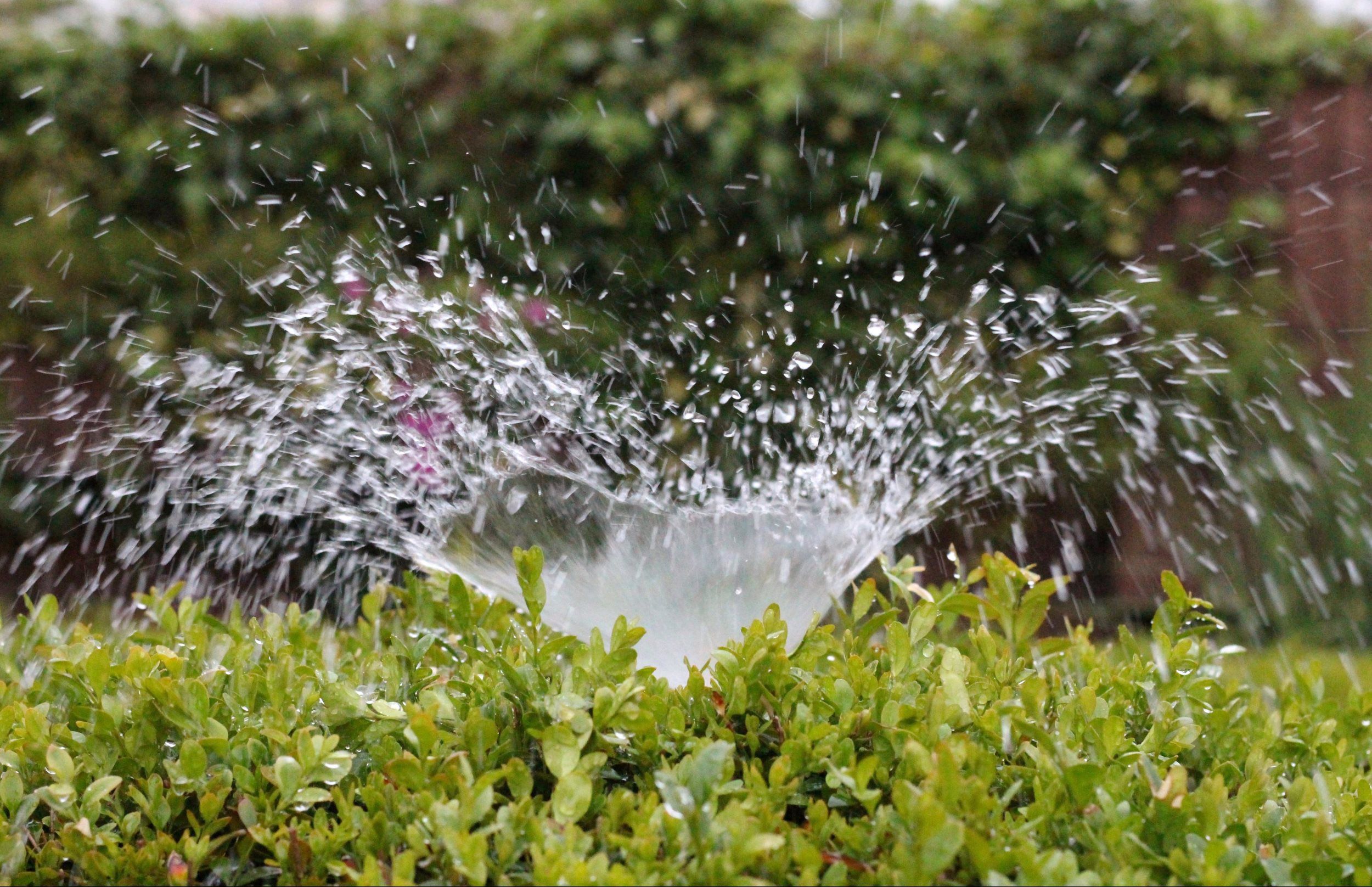
Sprinkler over-spray adjustment is the diagnosis and correction of irrigation heads that are delivering water outside their intended coverage zone — onto sidewalks, driveways, foundations, street pavement, neighboring properties, or non-irrigated landscape areas. Over-spraying is one of the most common inefficiencies in residential and commercial irrigation systems and one of the most frequently overlooked, because the system technically runs without producing an obvious failure the way a broken head or stuck valve does. The water goes somewhere — just not where it's supposed to go.
Over-spray problems have three distinct root causes, each of which requires a different correction. The first is physical head displacement — heads that have shifted position from frost heave, ground settlement, foot traffic impact, or lawn equipment contact. A head that was correctly positioned at installation can drift out of alignment over several seasons of freeze-thaw ground movement, directing its spray arc toward a hardscape that was never in its original coverage zone. The second cause is incorrect arc and radius calibration — heads whose spray pattern was never correctly set for the ...More

Signs Your Sprinkler System Needs Over-Spray Correction
Water on your driveway, sidewalk, or street pavement after irrigation cycles
This is the most visible over-spray sign and the one most homeowners notice first. Pavement that's consistently wet after morning irrigation cycles is receiving water from heads whose arc or throw radius extends beyond the lawn boundary. On Merrimack Valley properties where irrigation heads run at 5:00 or 6:00 AM, the pavement is often dry by the time anyone walks outside — making the over-spray easy to miss unless you observe the system running directly. The mineral staining that accumulates on pavement and hardscape surfaces over time is often the first clue.
Mineral staining or white residue on driveways, foundations, or hardscape
A zone that continues running after its scheduled cycle is a valve stuck in the open position — either a diaphragm that won't seat correctly due to debris or deterioration, or a solenoid that has failed in the energized position. This is the more urgent of the two common valve failure modes because a zone running continuously can flood lawn sections, saturate foundation areas, and run up water bills significantly before the homeowner notices. On Merrimack Valley properties where irrigation systems run early morning cycles, a stuck zone can run for hours before anyone is awake to catch it.
Wet foundation base or persistent moisture on exterior walls
Heads directed at or near a foundation deliver moisture to the structure every time the system runs — potentially hundreds of wet-dry cycles per season. Over time, this contributes to efflorescence on masonry foundations, accelerated siding deterioration at grade level, and in some cases moisture intrusion into basement or crawlspace areas. Any sprinkler head consistently wetting the base of the foundation or exterior wall within two feet of the structure warrants immediate arc adjustment.
Dry gaps in lawn coverage adjacent to areas that are being overwatered
Over-spray and coverage gaps frequently occur together in the same zone — a head that's throwing water beyond the zone boundary is not delivering that water to the lawn area it was designed to cover. If you're seeing dry patches in the lawn while adjacent hardscapes are being watered, the zone's arc and radius settings are likely misaligned rather than simply deficient. Adding water volume to a misdirected zone doesn't fix dry patches — correcting the head alignment does.
Heads that are visibly tilted, sunken, or misaligned relative to grade
A head that's physically off-level — tilted toward a driveway, sunken below grade on one side from ground movement, or leaning from frost heave — will spray in the direction of its tilt regardless of how the arc is set. Physical realignment of the head body is the correct fix; arc adjustment alone on a tilted head produces inconsistent results because the problem is mechanical rather than calibration-based.
Sprinkler Over-Spray Services at Trinity Landscaping
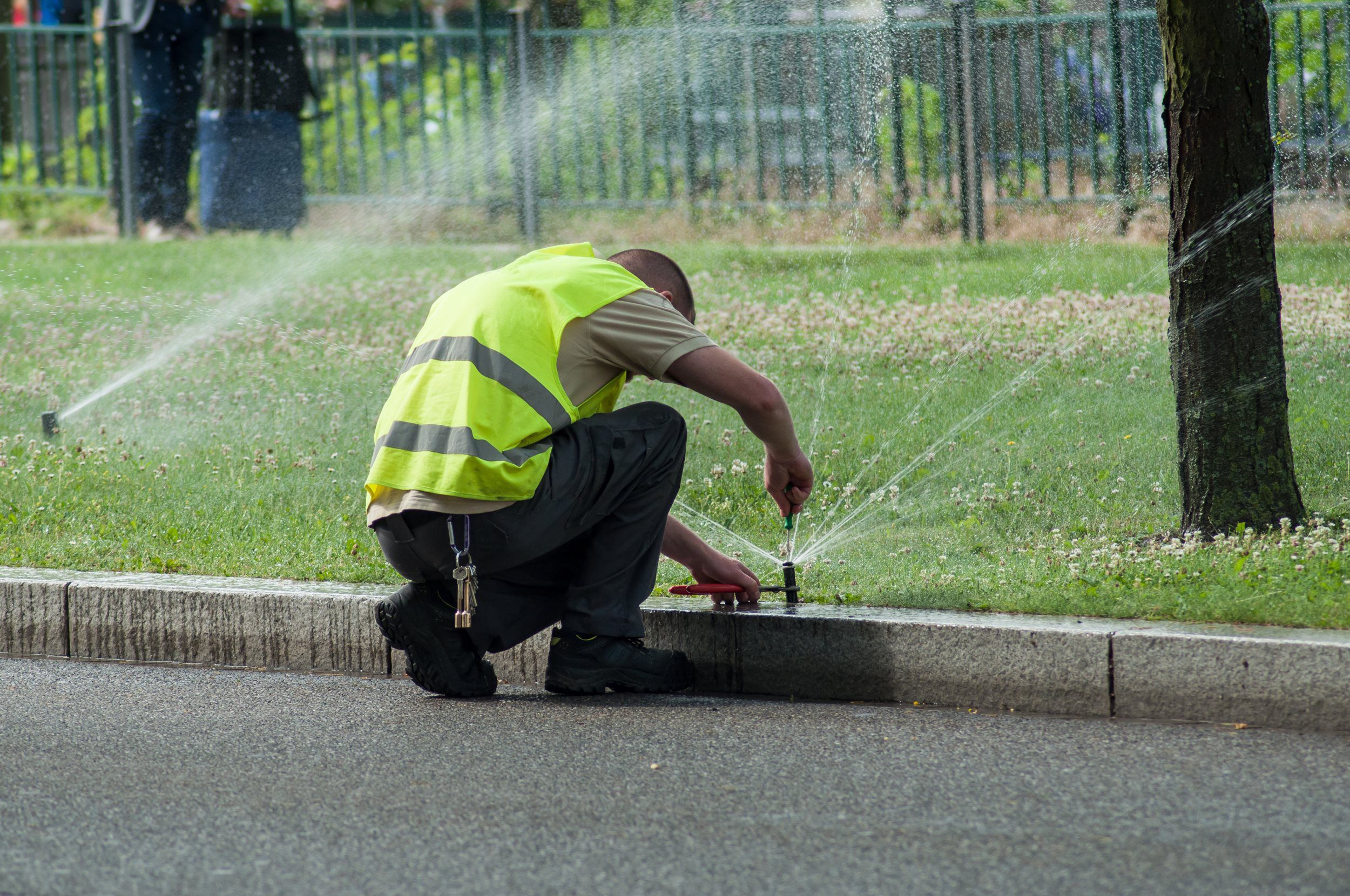
After all adjustments are complete, we run the full system again and walk every zone to verify that over-spray has been corrected and that coverage within the intended zone boundary is uniform. We check for dry gaps created by the arc reduction and make secondary adjustments where needed. You see the corrected system running before the visit ends.
Sprinkler Over-Spray Adjustment FAQs
How much does sprinkler over-spray correction cost in Methuen, MA?
Over-spray correction costs depend on how many heads need adjustment and whether the problem is calibration, physical misalignment, or pressure-related. Arc and radius adjustment on a single zone with several misaligned heads is typically a straightforward, lower-cost visit. Full zone recalibration across multiple zones, pressure correction requiring component installation, or head realignment requiring excavation involves more time and materials.
Can over-spray damage my foundation or driveway?
Yes — over time, consistent irrigation over-spray onto a foundation or driveway produces measurable damage. Repeated wet-dry cycles from irrigation water cause efflorescence on masonry foundations, accelerate deterioration of asphalt driveway surfaces at the irrigation contact point, and contribute to surface staining from mineral deposits in the irrigation water. Heads directed consistently at a foundation base also introduce moisture to the structure on every irrigation cycle — potentially hundreds of times per season — which can contribute to basement moisture issues on properties with marginal foundation drainage. Correcting the over-spray eliminates the moisture source.
Will correcting over-spray create dry spots in my lawn?
Done correctly, over-spray correction does not create dry spots — it redirects the water that was landing on hardscape back into the lawn coverage zone. The arc and radius reduction that stops a head from spraying onto the driveway is paired with a coverage verification step to confirm that the adjusted head still covers its intended lawn area with adequate overlap from adjacent heads. If the zone was designed with insufficient overlap to accommodate arc reduction, we note that and discuss options before adjusting — we don't create a new problem while correcting an existing one.
How long does a sprinkler over-spray correction visit take?
A single-zone correction with arc and radius adjustment on several heads typically takes one to two hours including the initial coverage inspection. Full system recalibration across multiple zones with pressure testing and physical head realignment takes two to four hours depending on system size and the number of heads requiring correction. We give you a time estimate after the initial zone inspection.